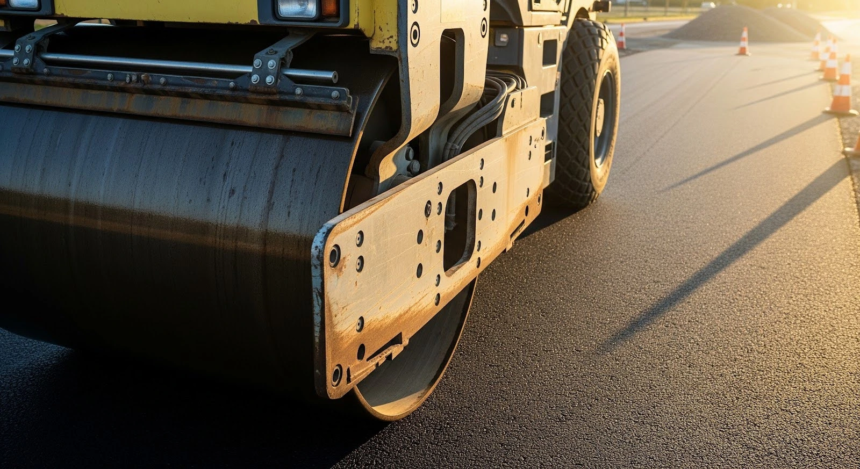
The energy debate has shifted. Electrification is advancing, and everyone says diesel is on the decline. And in some areas, you could maybe say that. But step onto a heavy construction site or a remote infrastructure project, and the diesel engine is still running the show.
The sustained output and reliability of diesel under heavy conditions remain unmatched by any alternative power source, and understanding why starts with what heavy machines actually demand from their power source.
Nothing else has the same energy density
The reason diesel has held its position for heavy machinery all comes down to physics. Diesel fuel carries more energy per litre than any commercially available alternative fuel at scale. That allows a diesel engine to sustain high-output work across long shifts without the refuelling frequency or the performance degradation that alternative power sources would produce.
A large excavator working a full shift needs to sustain hydraulic output across eight to ten hours of operation. And a heavy compaction machine needs to maintain a consistent drum force across different conditions for hours at a time.
In all these applications, the diesel engine’s energy density advantage gives you that operational capability that battery-electric systems just haven’t been able to replicate.
The engines themselves have also improved. Common-rail injection systems and advanced thermal management have now allowed diesel engines to extract more work from each litre of fuel. They’re also developed with emissions guidelines in mind, so there’s less of that, too.
Sure, some may say they’ve gotten costly. But the diesel engines price premium for these new models seems justified if you see the running cost reduction and the emissions compliance that comes with it.
Boom lifts and diesel at height
Access equipment is one of the categories where the diesel versus electric debate is most actively discussed, and it’s worth looking into why. Now, for indoor and low-level work, electric boom lifts make obvious sense. They’ve got sufficient battery capacity for the shift lengths these projects require. And no emissions and noise are definitely plus points!
But for large rough-terrain boom lifts working outdoors on construction sites, it’s different. A diesel boom lift reaching 30 or 40 metres on an uneven site surface, positioning across a long shift, needs a power source that can run the lift and the platform controls simultaneously without any performance drop. And diesel delivers that consistently across the full shift, regardless of how much the machine has worked in the preceding hours.
Imagine you’re overseeing a structural installation on a large industrial building project. The boom lift is working at 35 metres, and you’re on your second shift now. With a diesel boom lift, the second shift will pick up where the first left off.
But a battery unit can’t power such heavy installations without significant power depletions. With a battery boom lift, you’d have to check the battery levels and take a break to recharge first. And if your programme is tight, that break would eat into both your budget and your schedule.
That’s why a diesel boom lift for sale should be your first choice!
Electric units don’t have the same torque systems
Diesel engines produce peak torque at relatively low rpm. So they can easily generate their maximum torque at the speeds heavy equipment operates at. This allows diesel-powered units to maintain output under all conditions.
Of course, electric motors can produce high torque at low speed, too. But sustaining that across an extended operating period on a large machine requires battery capacity and thermal management that current technology just doesn’t have.
On a compact machine working short cycles, electric torque delivery can work just fine. But on a large machine working continuously across a full shift? No chance. Here, the diesel engine’s torque characteristics remain the most capable option.
Precision cutting tools and the power behind them
Heavy construction isn’t only about moving earth and lifting loads. Cutting and demolition work run alongside earthmoving on most active sites, and the power requirements of high-performance cutting equipment are significant.
A concrete disc cutter working through reinforced concrete during a demolition job needs sustained power from its drive system throughout the job. The blade needs to maintain a consistent rotational speed to cut cleanly without binding or causing premature wear.
Diesel-powered concrete disc cutters give you that consistent blade speed in the same duty cycle. The engine can support the cutting resistance without any rpm drop. That means cleaner cuts and less physical effort managing the machine through difficult material.
Concrete disc cutter cost reflects the machine’s duty rating, and for heavy reinforced concrete work, choosing a diesel-powered unit over any other pays back later in efficiency!
The concrete disc cutter is only one example. Diesel has earned its position as the king of heavy equipment through consistent performance across everything. Its reliability is unmatched. And until an alternative power source can promise the same, diesel isn’t going anywhere.