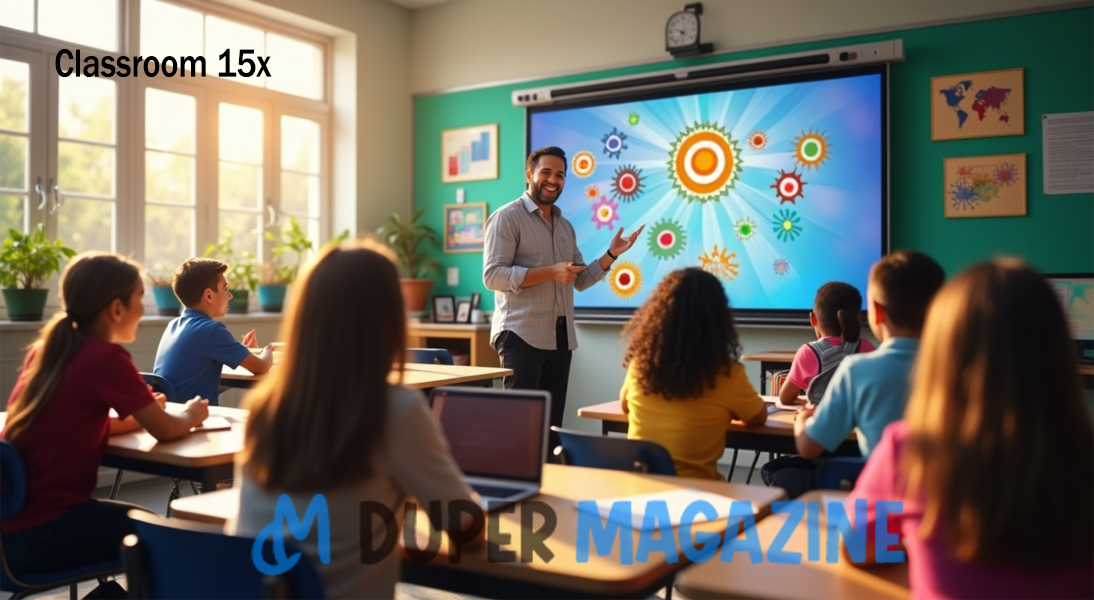
In the glittering world of modern education, where innovation and human curiosity meet, a new kind of learning environment has quietly begun to reshape how students grow, think, and connect with knowledge. Unlike loud trends that come and go, some ideas evolve steadily, shaped by real classrooms, real teachers, and real learners. This story explores one such approach, tracing its philosophy, its human roots, and the lived experience that has made it resonate with educators across the globe.
The Human Story Behind a New Learning Model
Every meaningful educational shift begins with people rather than policies. The concept behind Classroom 15x was born from years of classroom observation, long conversations with teachers, and the shared frustration of seeing students disengage in overcrowded, rigid learning spaces. At its heart, this model reflects a belief that learning works best when students are seen, heard, and actively involved.
The educators who shaped this approach were not chasing perfection. They were responding to real limitations: limited time, diverse learning needs, and the emotional weight teachers carry every day. By focusing on depth rather than scale, they envisioned a classroom where fewer students could mean richer dialogue and stronger relationships.
What Makes This Model Different?
Traditional classrooms often prioritize coverage over comprehension. In contrast, Classroom 15x is built on the idea that smaller groups allow learning to slow down just enough for understanding to take root. Instead of racing through content, teachers have the space to adapt lessons in real time, responding to confusion, curiosity, or creative sparks as they appear.
This approach does not rely on flashy technology or rigid scripts. It emphasizes human interaction, thoughtful pacing, and intentional design. Desks are arranged to encourage discussion. Lessons are structured to invite questions rather than silence them. Over time, students begin to see learning as a shared journey rather than a performance.
The Philosophy of Small but Powerful Learning
At the core of Classroom 15x lies a simple philosophy: learning is relational. When class sizes are intentionally limited, teachers can notice subtle shifts in student behavior, emotional states, and learning preferences. These small observations often make the difference between a student drifting away and one who feels supported.
This model also values mastery over memorization. Students are encouraged to explore concepts deeply, revisit ideas, and apply knowledge in practical contexts. The result is not just higher academic confidence, but a stronger sense of ownership over learning.
A Day Inside the Classroom
Walking into a classroom designed around Classroom 15x feels noticeably different. The atmosphere is calm but alive. Students greet their teacher by name, and conversations begin before lessons officially start. This sense of belonging sets the tone for the day.
Lessons often begin with open-ended questions. Rather than delivering long lectures, teachers guide discussions, encourage peer explanations, and allow moments of productive silence. Students who might have stayed quiet in larger classes find their voices here, gradually building confidence through consistent engagement.
The Role of the Teacher as a Guide
In this model, the teacher’s role shifts from information provider to learning guide. Classroom 15x encourages educators to facilitate exploration rather than control every outcome. This does not mean less structure; it means more intentional structure.
Teachers plan lessons with flexibility in mind, leaving room for student-led inquiry. Over time, this approach reduces burnout, as teachers are no longer battling disengagement but collaborating with motivated learners.
Emotional Intelligence and Student Wellbeing
Academic success cannot be separated from emotional wellbeing. Classroom 15x places strong emphasis on creating emotionally safe spaces where students feel respected. Smaller class sizes make it easier to notice stress, anxiety, or withdrawal and address these concerns early.
Students learn not only academic content but also communication, empathy, and self-awareness. These skills often extend beyond the classroom, shaping how students interact with peers and approach challenges in everyday life.
Technology as a Support, Not a Centerpiece
While technology has a place in modern education, Classroom 15x treats it as a tool rather than a centerpiece. Digital resources are used to enhance understanding, not replace human connection. Teachers choose tools thoughtfully, ensuring they serve learning goals instead of distracting from them.
This balanced approach helps students develop healthy relationships with technology, using it to research, collaborate, and create rather than passively consume information.
Measurable Outcomes and Real Feedback
Schools adopting Classroom 15x often report noticeable changes within the first year. Attendance improves, classroom disruptions decrease, and students demonstrate stronger critical thinking skills. These outcomes are supported by qualitative feedback from teachers and parents who observe increased enthusiasm for learning.
Students frequently describe feeling “known” by their teachers, a simple but powerful indicator of meaningful educational connection.
Adapting the Model Across Age Groups
One of the strengths of Classroom 15x is its adaptability. While it is particularly effective in middle and high school settings, its principles can be applied at almost any educational level. Younger students benefit from the increased attention and guidance, while older learners appreciate the respect and autonomy the model fosters.
The key is not rigid replication but thoughtful adaptation to the needs of each learning community.
Challenges and Honest Limitations
No educational model is without challenges. Classroom 15x requires institutional support, careful scheduling, and investment in teacher development. Smaller class sizes may not be immediately feasible for every school.
However, many educators argue that the long-term benefits, including improved retention and reduced teacher burnout, make the effort worthwhile. The model invites schools to rethink priorities rather than simply add new initiatives.
The Future of Thoughtful Education
As education continues to evolve, Classroom 15x offers a reminder that progress does not always mean bigger or faster. Sometimes, it means more intentional, more human, and more connected. By centering relationships and deep learning, this model points toward a future where classrooms are places of genuine growth.
Final Thoughts
Classroom 15x stands as a quiet but powerful example of how education can evolve without losing its human heart. By focusing on connection, intentional design, and respect for both teachers and students, it offers a path forward that feels not only effective, but deeply humane.